
Loading...
Support Democracy in Africa
Your M-Pesa donation directly funds inter-party dialogue across the continent.
News · December 19, 2025 · AIPDN Editor
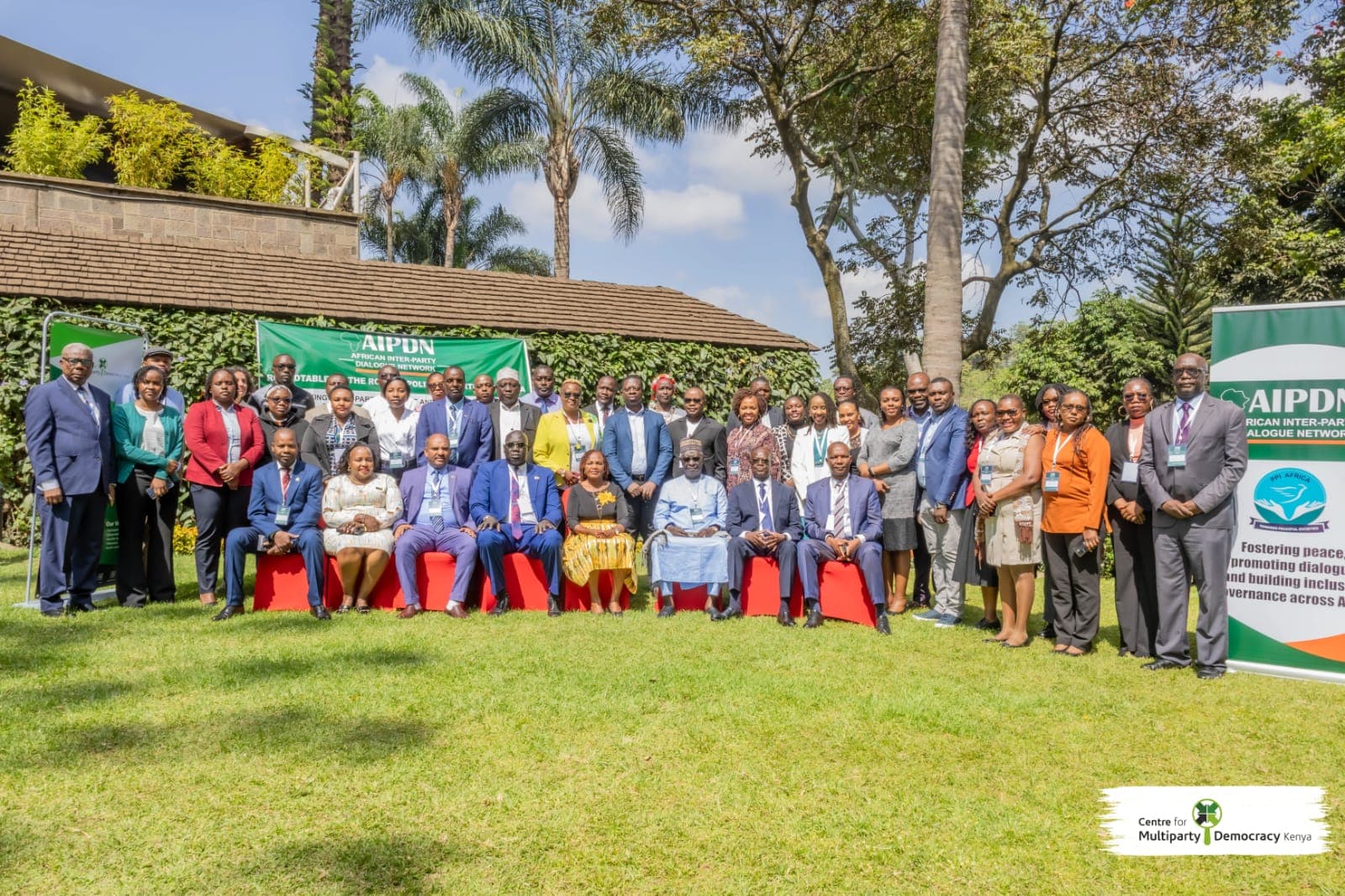
The African Inter-Party Dialogue Network (AIPDN) organized a substantial regional gathering in Nairobi, assembling over 50 delegates from political organizations, civil society groups, academic institutions, and policy bodies across Eastern, Western, and Southern Africa. The convening centred on the theme "Rethinking Inter-Party Dialogue and Consensus Building," examining pathways for political parties to advance democratic governance amid widespread citizen discontent with exclusionary political processes.
Presenters emphasized that political organizations form democracy's foundation, yet many across the continent suffer from weak institutional structures, inadequate funding, and citizen disconnection, particularly among youth populations. The assembly investigated how organized dialogue, institutional improvements, and regional cooperation can restore confidence and reinforce political structures.
Initial remarks and keynote presentations highlighted the imperative for political organizations to transcend winner-takes-all competitive models. Leaders identified escalating youth frustration as evidence that organizations require expanded, more responsive membership opportunities.
Contributors observed that despite electoral prominence, organizations themselves encounter limited transformation, financial irregularities, and insufficient internal participation frameworks. Young individuals face particular exclusion because of economic constraints, prohibitive participation expenses, and scarce meaningful involvement pathways.
Presentations examined programmes in Ghana (IPAC), Uganda (IPOD), and Kenya (PPLC) as examples for formalizing deliberation. These structures facilitate agreement-building, increase responsibility, and manage transformation processes.
Case examples from South Sudan, Somaliland, and Ethiopia illustrated obstacles in cultivating deliberation where administrative systems are fragmented and competitive factions predominate. Participants advocated for incorporating customary authority frameworks, confirming substantial representation of female members and disabled individuals, and emphasizing collective national objectives.
The gathering produced an extensive fifteen-point renewal programme encompassing: establishing enduring dialogue mechanisms with explicit statutory authorization and sufficient financial backing; transforming political organizations and promoting comprehensive, multigenerational engagement; narrowing confidence deficiencies via continuous deliberation connecting organizations, populations, and electoral bodies; resisting legal manipulation and preserving electoral reliability via judicial proceedings and joint political mobilization; apportioning funds to underrepresented populations, guaranteeing their comprehensive governmental involvement; and bolstering media partnerships, civic initiatives, post-election reconciliation, and expanded population involvement throughout the region.